
Introduction
Čičmany is a village and municipality in the Zilina Region of northern Slovakia. It is known as the first folk architecture reserve in the world (founded in 1977).
The first preserved reference to the village dates from 1272. After a great fire in 1921, the village was restored to its original appearance with generous contributions by the state. Until the mid-20th century, the village was a centre of sheep raising.
The Trip
With the ESN SUA of Nitra, the association which takes care of Erasmus students in Nitra, we travelled in Cicmany to discover the Slovakia life traditions. We went with 50 students by bus at Cicmany which is situated about 1H15 from Nitra. Cicmany is in the low mountains of Slovakia, about 600 meters. Above, you can see a picture of one of traditional houses in this town.
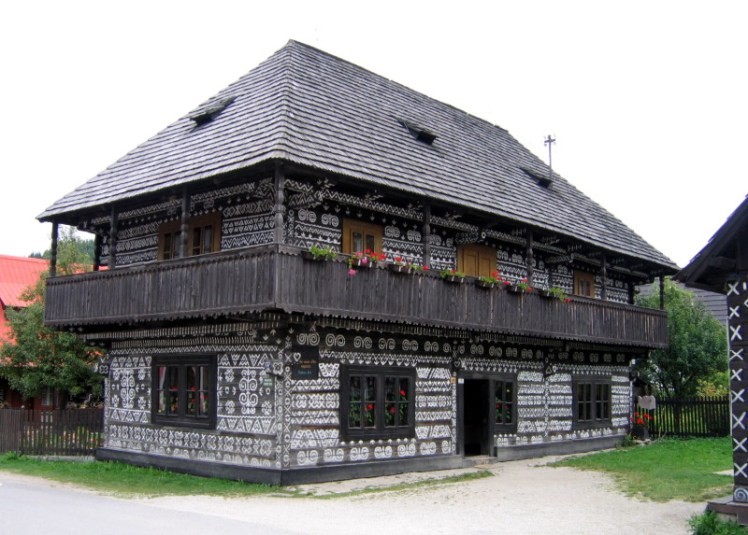
This typical house is now a museum where you can see the typical slovak life.
Typical clothes
In this house, we saw a display of different clothes and a presentation of different parts by a guide.
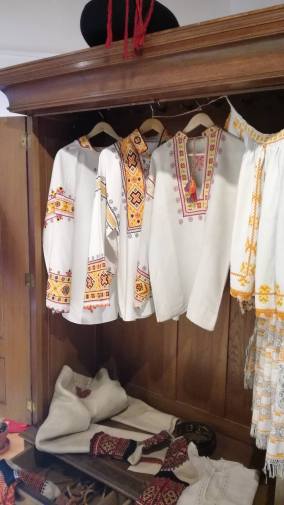
Work cloth of men was very simple and practical. It consisted
of pants of simple straight cut at the waist lightened by a string, which were worn under trousers. Bottom could be decorated by embroidered grid and ornamental stitches. The top trousers, called “sukenaki” were made of white and grey linen. Grey trousers were considered work clothes. It was also lightened at the waist by a string that came out of opening in an upper left part of trousers. In a cold weather men wore simple decorated coat, called “huna” made white homemade linen. Huna could be worn at every occasion, but it was also an important part of garment of a young groom. This picture shows you the typical cloth of men.
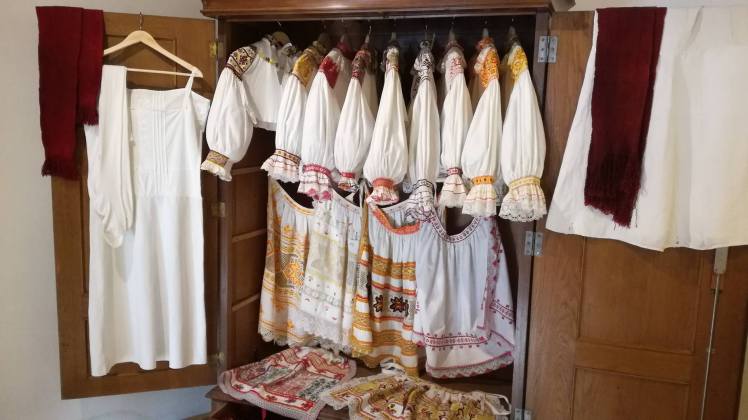
Women wore white linen clothing with embroidery and laces mostly in red, yellow or orange shades. Work wear consisted of linen shirt, plecko that was the lowermost and very simple part. There is an underskirt call “spodnik” made of flax or hemp cloth. For better attachment of underskirt was used red or deep red woolen belt worn in every season and every occasion. The uppermost, the most beautiful and the most decorated part of clothing was short apron, called “zaponka”. They put directly on the top of Spodnik. Apron was embroidered by wool of cotton, it could be enriched by lace inserts and so called “Jewish stitching”. Above you can perceive a picture of women clothes.
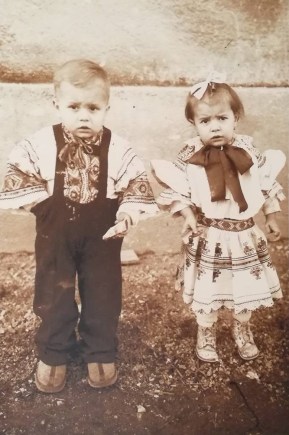
Children’s clothes weren’t much decorated or complex, because children grow up quickly. First shirt was given to child mostly when it started to walk. It was long, so it could be worn a long time. This shirt didn’t have embroidery or it was very simple, for example a cross pattern. Girls wore “rukavce” with pleated sleeves and small stand-up collar. Children got clothes about six years old. Boys received new shirts similar to men’s shirt embroidered with cross pattern and their first white linen trousers lightened by a string called “zinka” at the waist. Girls this age received first pleated and embroidered skirt. Fully embroidered garment was given to children to their first communion. Young women before wedding used to wear clothing like wedded women. On the right side, you can see a picture of two children who are well dressed
the next steps of the day
After this exposition where we saw also information about the traditional Folk Architecture of the Cicmany, the footwear, the hairstyle, garment accessories, the livestock farming and the agricultural crop production, we visited another city which called Kremnica.
First, we visited a church which called St. Catherine Church. A guide explains us some things inside the church and after we come in the tower to see the landscape of this town. Above a picture of this view.
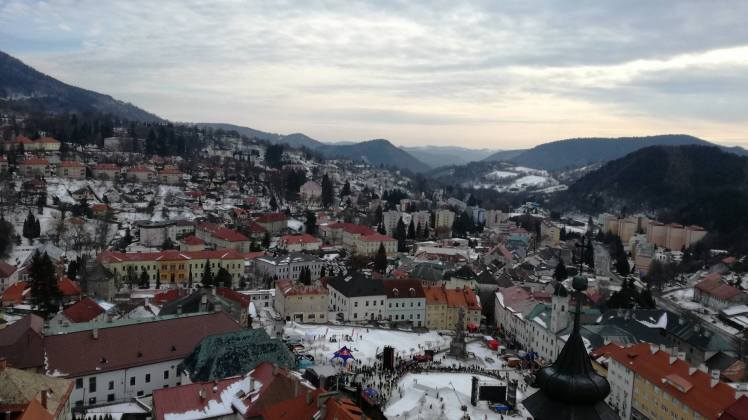
You can see on this picture a ski jumping competition which was organised all the afternoon and sponsored by Jägermeister.
We decided also to test a special food called “Kürtőskalács”, it is a spit cake specific to Hungarian-speaking regions in Romania. Earlier a festive treat, now it is part of everyday consumption.
Kürtőskalács is made from sweet, yeast dough (raised dough), of which a strip is spun and
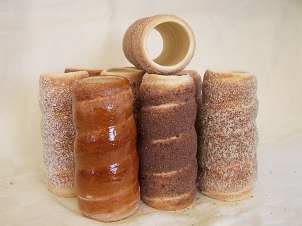
then wrapped around a truncated cone–shaped baking spit, and rolled in granulated sugar. It is roasted over charcoal while basted with melted butter, until its surface cooks to a golden-brown colour. During the baking process the sugar stuck on the kürtőskalács caramelises and forms a shiny, crispy crust. The surface of the cake can then be topped with additional ingredients such as ground walnut or powdered cinnamon. This picture above shows you this dessert.
Charlie Planchenault
 Erasmus in Slovakia